
Can I Get a Loan If I'm Blacklisted or Have Late Payments in Malaysia?
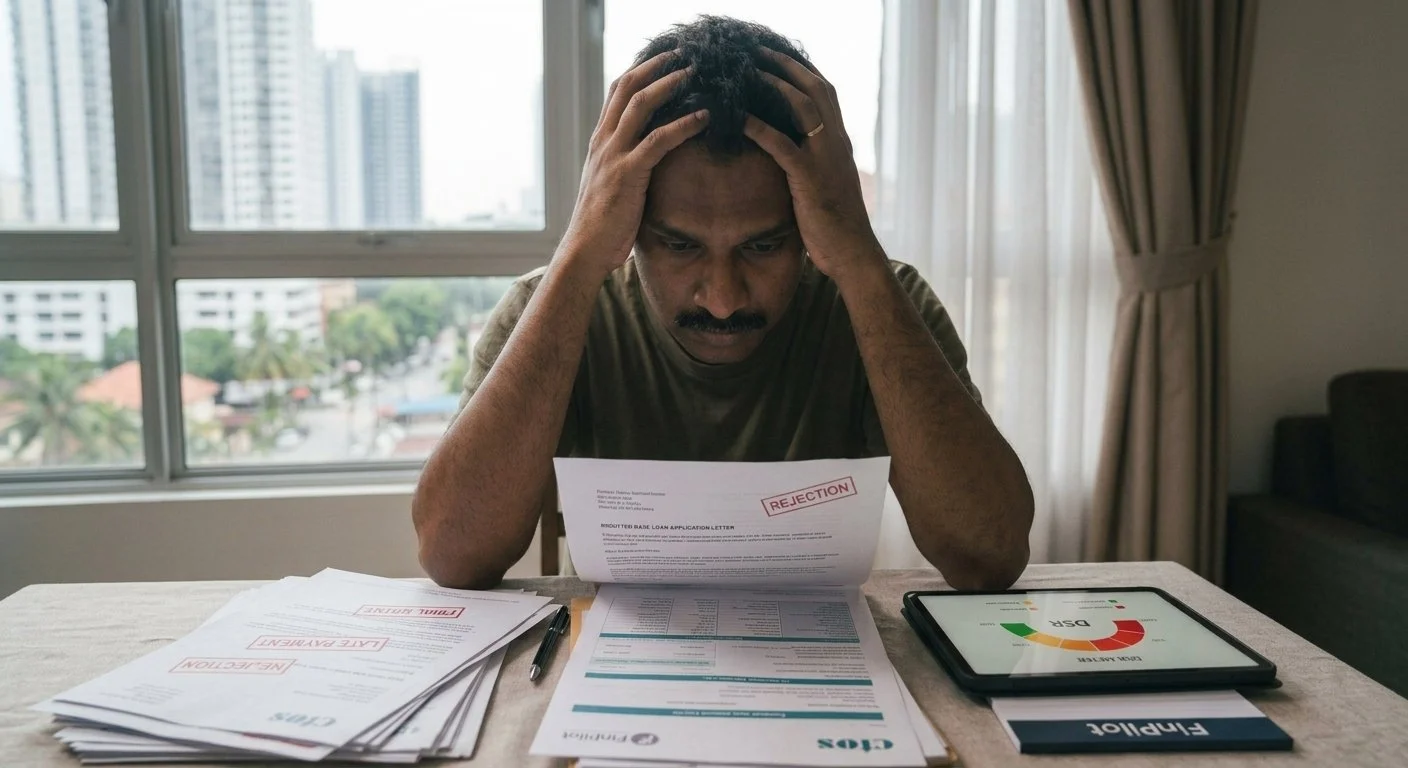
If you've been turned down once, "blacklisted" is probably the word going through your head right now. It gets used loosely in Malaysia to describe anything from a few late payments to a serious default — and the honest answer to whether you can still get approved depends entirely on which one actually describes you.
Here's what's actually true, and what a personal loan advisor or debt consolidation consultant can realistically do about it.
There's No Official "Blacklist" — But Your Report Tells the Story Anyway
Malaysia doesn't have a single central blacklist that locks you out of borrowing. What actually happens is that banks check your CTOS and Experian reports, which show your repayment history, outstanding commitments, and any defaults — and each bank sets its own threshold for what it's willing to accept.
That means "blacklisted" usually means one of a few different things in practice:
A few late payments — these show up but don't automatically disqualify you, especially if they're old or isolated
A high Debt Service Ratio (DSR) — too much of your income already committed to other debts, even if payments are on time
An active default or write-off — a more serious mark that significantly narrows your options
Guarantor exposure — being listed as a guarantor on someone else's loan that's gone into arrears, which can affect your own applications even though it isn't technically your debt
Knowing which of these actually applies to you changes everything about what happens next — which is exactly why a proper credit report review, not a guess, is the first real step.
What a Loan Advisor Actually Checks
A personal credit advisor or loan consultant's first move isn't to apply anywhere — it's to pull your CTOS and Experian reports and read them the way an underwriter would, not the way most people read them (skimming for a scary-looking number).
That review typically looks at:
How recent and how frequent your late payments are
Your current DSR, and how much room — if any — you actually have
Whether any item is a default, a write-off, or just a late mark
Whether your income level (RM3,000 and above tends to open up more options) supports a workable plan despite the report
This step matters because two people who both describe themselves as "blacklisted" can be in very different positions — one might be a few months of clean payments away from qualifying again, the other might need a completely different approach.
Your Realistic Options
If it's a handful of late payments, not a default:
Some banks are more flexible than others about isolated late payments, especially if your recent repayment history has been clean. A bank loan advisor who works across multiple banks regularly will usually know which lenders are actually open to this, since it isn't something you can find out from a bank's website.
If your DSR is the real issue, not your credit history:
This is where debt consolidation often comes in. Combining multiple existing debts into a single loan with one manageable monthly payment can bring your DSR back into a range that qualifies you for further financing — assuming the consolidation itself is structured properly. A debt consolidation advisor's job here is to calculate whether this genuinely improves your position, not just simplifies your paperwork.
If you're a guarantor on a defaulted loan:
This one catches people off guard. It's not your debt, but it can still show up against you. Resolving this usually means addressing the underlying loan directly — a financial debt advisor can help you understand what your actual exposure is and what steps might clear it.
If it's an active default or write-off:
This is the hardest situation to work around quickly, but it's not necessarily permanent. Some banks and non-bank lenders will still consider applications here depending on income and how long ago the default occurred. A loan consultant with experience across multiple lenders — not just major banks — will usually have a clearer sense of what's realistically available.
Why Applying Blind Makes This Worse
If your credit report already has marks against it, applying to multiple banks yourself to "see what sticks" is one of the most common mistakes. Every rejection is another hard inquiry, and multiple rejections in a short window compound against you — making the next application look weaker even if nothing else has changed.
This is where working with a loan advisory service actually earns its keep for this specific situation: rather than applying broadly and hoping, the goal is identifying the one or two lenders genuinely open to your profile, and applying there with a properly prepared application the first time.
What to Expect If You Reach Out
A proper conversation with a loan consultant Malaysia-based and familiar with this situation should look like:
A full review of your CTOS/Experian report, not a summary of "good" or "bad"
An honest read on whether you currently qualify, and if not, what would need to change
If consolidation makes sense, a calculation of what it would actually save you — not just simplify
If a direct application is realistic, a shortlist of lenders actually known to consider your profile
A clear timeline, since fixing a DSR or clearing a default isn't usually instant
Frequently Asked Questions
-
Not in the sense most people imagine. There's no single list — banks rely on your CTOS and Experian reports and set their own thresholds for what they'll accept.
-
Often, yes, particularly if the late payments are isolated and your recent history is clean, and especially if your salary is RM3,000 or above. It depends on the specific report, not a blanket rule.
-
It can, if the rejection was driven by a high DSR rather than a default. Consolidating existing debts into one lower, more manageable payment can bring your DSR back into a range that qualifies for further financing.
-
This varies significantly depending on the lender and how long ago the default occurred, alongside your current income and repayment behaviour. A proper credit report review is the only way to get a realistic answer for your specific situation.
-
This usually backfires. Multiple rejections in a short window show up on your credit file and can make subsequent applications look weaker. It's generally better to identify the right lender first.
If you're unsure where you actually stand, FinPilot offers a free consultation to review your CTOS/Experian report honestly and talk through what's realistically possible — whether that's a direct application, a consolidation plan, or simply a clearer picture of what needs to change first.
